


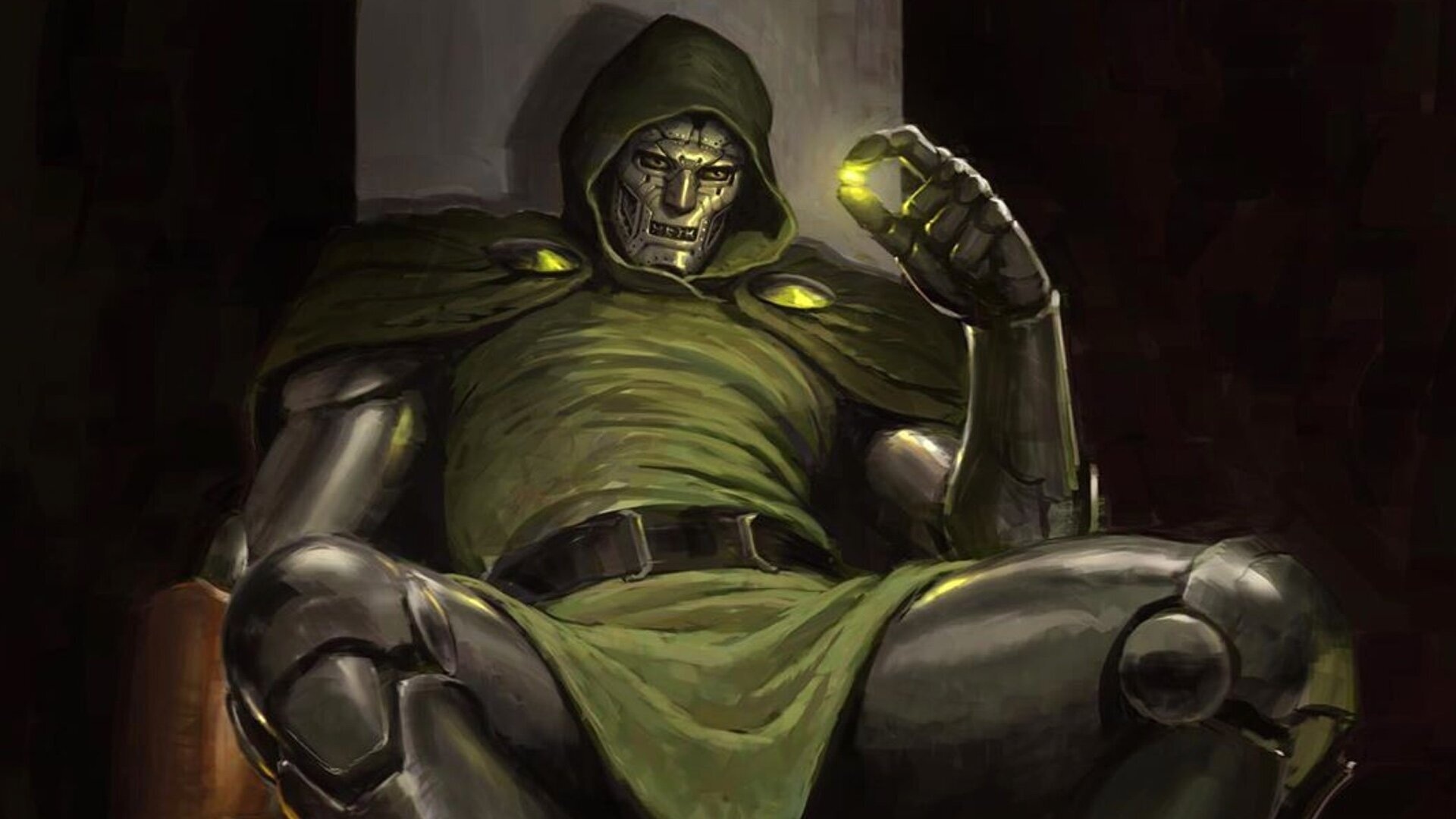


When you think of iconic villains in comic book history, one name stands above the rest: Dr. Doom. But what makes Victor Von Doom so memorable isn’t just his intellect or his quest for power—it’s that unforgettable metal mask that has become synonymous with tyranny, genius, and tragedy in the Marvel Universe.
Who Is Dr. Doom?
Dr. Doom, born Victor Von Doom, is widely considered Marvel’s most formidable and complex villain. Created by Stan Lee and Jack Kirby in 1962, Doom first appeared in Fantastic Four #5 and has since become the archenemy of Marvel’s First Family while also clashing with nearly every major hero in the universe.
Unlike many villains driven purely by greed or chaos, Doom operates from a place of absolute conviction. He genuinely believes that only under his rule can humanity achieve peace and prosperity. This moral complexity makes him far more than a simple antagonist—he’s a character with depth, motivation, and occasionally, moments of genuine heroism.
Victor Von Doom rules the fictional nation of Latveria with an iron fist, combining technological genius with mastery of the mystic arts. He’s one of the few characters in Marvel who can stand toe-to-toe with Reed Richards intellectually and Doctor Strange mystically, making him a truly multidimensional threat.
The Story Behind Dr. Doom’s Mask
The Dr. Doom mask is far more than a costume piece—it’s the physical embodiment of Victor Von Doom’s tragedy, pride, and transformation from promising student to feared dictator.
The Scarring Incident
According to comic book lore, Victor Von Doom was once a brilliant but arrogant student at Empire State University, where he met Reed Richards. Obsessed with creating a machine to contact his deceased mother’s soul in another dimension, Doom ignored Reed’s warnings about flaws in his calculations.
The experiment exploded, scarring Doom’s face. Here’s where the tragedy deepens: most accounts suggest the actual scarring was minor—perhaps just a small mark on his cheek. But to the perfectionist Doom, even the slightest imperfection was utterly unbearable.
The Mask’s Creation
After the accident, a devastated Doom traveled to Tibet, seeking refuge and wisdom from a secluded order of monks. There, he learned ancient secrets and had his now-famous armor forged. In his impatience and fury, Doom placed the metal mask on his face while it was still red-hot from the forge, permanently disfiguring the face he was trying to hide.
This act transformed a possibly minor scar into severe burns—a self-inflicted punishment that symbolizes Doom’s perfectionism becoming his ultimate downfall. The mask that was meant to hide his flaw became the instrument that created a far worse one.
The Symbolism of Dr. Doom’s Mask
The Dr. Doom mask represents multiple layers of meaning that make it one of the most powerful visual symbols in comics:
The Loss of Humanity: Once Victor Von Doom puts on the mask, he ceases to be a man and becomes an icon of power. The mask dehumanizes him, allowing him to commit acts a man might hesitate to do.
Unattainable Perfection: Doom’s refusal to accept even minor imperfection speaks to a broader human struggle with self-acceptance. His mask is a permanent reminder that the pursuit of perfection can be self-destructive.
Power and Fear: The cold, emotionless metal face strikes terror into allies and enemies alike. It’s designed to intimidate, to showcase that whoever wears it is beyond ordinary human concerns.
Hidden Truth: What lies beneath the mask has been a source of speculation for decades. Various storylines have shown different degrees of scarring, but Doom never allows anyone to see his true face, making the mask a barrier between himself and all human connection.
Design Evolution of the Dr. Doom Mask
Over the decades, the Dr. Doom mask has undergone various artistic interpretations while maintaining its core intimidating presence:
The original Jack Kirby design featured a relatively simple metal faceplate with a hood, establishing the medieval knight aesthetic that would define the character. The mask has always included signature elements: the metal construction, the hood or cowl, the emotionless expression, and often green or gray coloring to match his armor.
Modern interpretations have added more detail and texture, incorporating rivets, weathering, and more sophisticated metalwork that suggests advanced technology beneath the medieval exterior. Some versions emphasize the mystical aspect with occult symbols or energy effects, while others lean into the tech side with glowing elements or visible circuitry.
Fan Theories About What’s Under the Mask
The Marvel fandom has developed numerous theories about what truly lies beneath Dr. Doom’s mask:
The “Not That Bad” Theory: Many fans believe Doom’s face is actually barely scarred at all, and his mask is purely psychological—a monument to his own vanity and inability to accept anything less than perfection.
The “Completely Disfigured” Theory: Others argue that when Doom placed the burning mask on his face, he truly was horrifically scarred, making the mask a necessity rather than a choice.
The “Mystical Transformation” Theory: Some speculate that Doom’s dabbling in dark magic has physically changed his appearance in ways beyond simple scarring—perhaps making him something no longer entirely human.
The “Schrodinger’s Scar” Theory: A meta interpretation suggests that Marvel deliberately keeps the truth ambiguous because the mystery is more powerful than any answer could be. The mask’s meaning changes depending on which interpretation you choose.
Dr. Doom’s Mask in Popular Culture
The Dr. Doom mask has transcended comics to become a recognized cultural icon:
In the 2005 and 2007 Fantastic Four films, Julian McMahon portrayed Doom with a metallic, modernized mask design. While the films received mixed reviews, the mask itself remained a striking visual element.
The character has appeared in various animated series, video games, and merchandise, with each adaptation bringing its own interpretation to the iconic mask design. From Marvel vs. Capcom fighting games to Marvel Ultimate Alliance, the mask remains instantly recognizable.
With Marvel Studios gaining the rights to Fantastic Four, speculation runs rampant about how the MCU will handle Doom’s introduction. Will they show his face before the mask? Will they reveal what’s underneath? How will they balance the character’s technological and mystical aspects? These questions keep fans theorizing and debating.
Why Dr. Doom Remains Marvel’s Greatest Villain
What sets Dr. Doom apart from other villains is the tragic nobility behind the mask. He’s not evil for evil’s sake—he genuinely believes his rule would save humanity from itself. He’s proven capable of moments of honor, keeping his word even when it disadvantages him.
Storylines like “Books of Doom” and “Infamous Iron Man” (where Doom temporarily became a hero) have explored the complexity beneath the metal face. They’ve shown that Victor Von Doom is capable of growth, sacrifice, and even heroism—making him far more than a simple antagonist.
The mask serves as a constant reminder of his self-imposed isolation from humanity. It’s both his armor and his prison, protecting him from the world while preventing him from truly connecting with it.
The Legacy of Dr. Doom and His Mask
After more than 60 years, Dr. Doom and his iconic mask remain as relevant as ever. The character has influenced countless other villains in comics and beyond, establishing the template for the “villain who thinks he’s the hero” archetype.
The mask itself has inspired real-world products, from high-end collectibles to cosplay tutorials, Halloween costumes, and even fashion. Its design is so iconic that even people who’ve never read a comic can recognize it instantly.
As we look toward the future of the MCU and Marvel comics, one thing remains certain: whenever Dr. Doom appears, that metal mask will be there, hiding secrets, projecting power, and reminding us that sometimes the greatest tragedies are self-inflicted.
Conclusion
The Dr. Doom mask is more than just a piece of metal—it’s a symbol of pride, tragedy, perfectionism, and power. It represents Victor Von Doom’s transformation from a brilliant student to the most feared dictator in the Marvel Universe. Whether you believe his face is barely scarred or horrifically disfigured, the mask’s true power lies in what it represents: the moment when Victor Von Doom died and Dr. Doom was born.
The next time you see that imposing metal visage in a comic, film, or game, remember that you’re looking at one of fiction’s most powerful symbols—a reminder that sometimes our attempts to hide our flaws only make them permanent, and that the pursuit of perfection can be the most destructive quest of all.
What do you think lies beneath Dr. Doom’s mask? Is he hiding horrific scars or merely a tiny imperfection that his pride cannot accept? The beauty of the mystery is that the answer might say more about us than about Doom himself.
